ANC: More Than Just a Clinic Visit
What is antenatal care and why does it matter beyond simply checking your weight?
18/08/2026
What Antenatal Care Actually Is
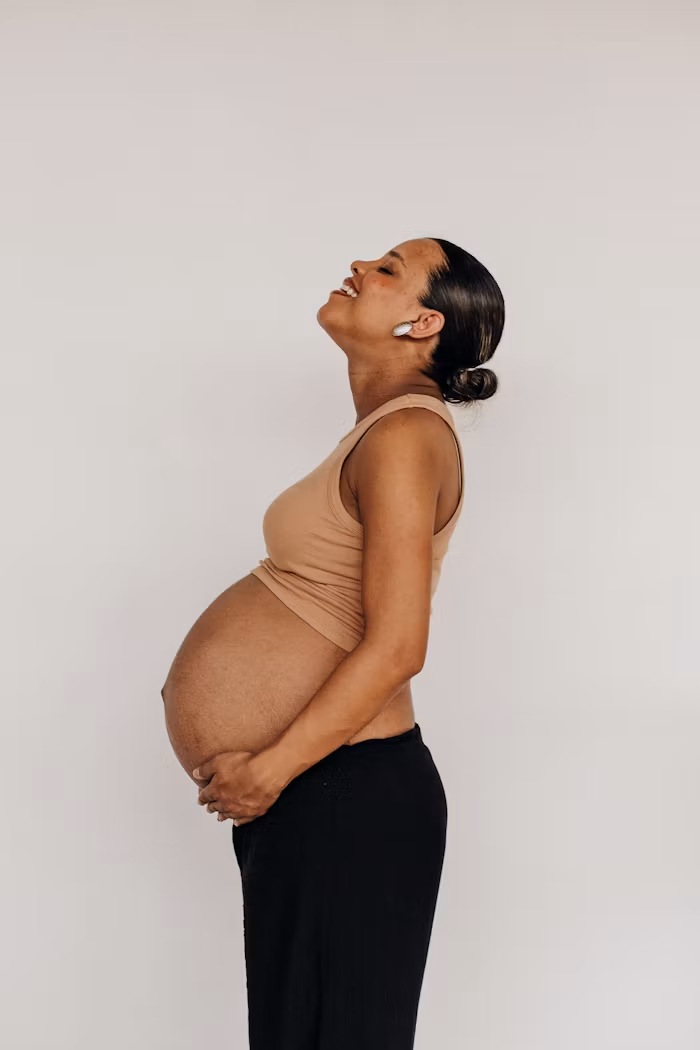
Antenatal care (ANC) — also called prenatal care — is a systematic, evidence-based programme of health checks and interventions provided to pregnant women from early pregnancy through to delivery. It is far more than simply weighing you and checking your blood pressure. At every ANC contact, your provider is conducting a comprehensive assessment of you and your baby and delivering a package of proven treatments that are critical for your survival and your baby's health.
Rwanda Ministry of Health's national ANC guidelines follow WHO's 2016 evidence-based recommendations, which define ANC as the central platform for delivering life-saving interventions to pregnant women — particularly in settings where complications would otherwise go undetected until they become emergencies.
The Life-Saving Interventions Delivered at ANC
Every ANC visit delivers several evidence-based interventions simultaneously. Blood pressure monitoring detects preeclampsia — the leading cause of maternal death in Rwanda — before it progresses to eclampsia (seizures). HIV testing and treatment prevents mother-to-child transmission. Syphilis screening and treatment prevents stillbirth and disability. Haemoglobin testing and iron supplementation prevents fatal anaemia at delivery. IPTp-SP prevents malaria, which is a major cause of anaemia and preterm birth. Tetanus toxoid vaccination protects your newborn from neonatal tetanus.
None of these interventions can be reliably delivered outside an ANC setting. Your CHW (Umujyanama w'ubuzima) cannot test your blood pressure, order blood tests, or prescribe medications. ANC is the only place where all of these happen together, systematically, at each visit.
ANC as Health Education
ANC is also Rwanda's most important platform for health education during pregnancy. At each visit, providers give counselling on nutrition, supplement use, danger signs, birth preparedness, breastfeeding, family planning, and newborn care. This education is not just informational — it is associated with measurable improvements in health behaviour.
According to the Rwanda Demographic and Health Survey (DHS) 2019–2020, women who attended four or more ANC visits were significantly more likely to deliver in a health facility, receive skilled birth attendance, and breastfeed exclusively. ANC changes behaviour that protects lives.
ANC and Skilled Birth Attendance
ANC is the entry point into a continuum of care that leads to safe delivery. Women who engage with ANC early are more likely to plan for a facility delivery, arrange transport in advance, pack a delivery bag, know the warning signs of labour, and know when to go to hospital. Rwanda has achieved remarkable progress — over 94% of births now occur in a health facility (DHS 2019–20), compared to less than 30% in 2005.
This transformation was driven substantially by Rwanda's investment in ANC quality and community health workers who mobilise women into the health system early. Attending your ANC contacts is your participation in this achievement and your contribution to your own safe birth.
Why Every Contact Matters
The WHO 2016 recommendation of eight or more ANC contacts is based on evidence showing that women who have more contacts have better outcomes than those with fewer. Each contact is an opportunity to catch a developing problem — blood pressure that was normal at week 12 may be elevated at week 28. A baby that was well-grown at week 20 may show growth restriction at week 32.
Missing any contact means missing a monitoring opportunity that cannot be retroactively recovered. The health problem detected late is always harder to manage than the one caught early. If you have missed an ANC appointment, do not wait for the next scheduled one — attend as soon as possible and tell your provider which visit you missed.
Related Articles

When Should I Start ANC?
Rwanda MoH and WHO both recommend starting ANC before 12 weeks. Here is why early registration is critical and what to do if your pregnancy was discovered late.
Read articles
How Many ANC Contacts Should I Have?
Rwanda MoH recommends a minimum of four ANC contacts, while WHO recommends eight or more. Here's the schedule, what each contact delivers, and why none should be missed.
Read articles
What Happens During an ANC Visit?
A step-by-step walkthrough of exactly what happens during a typical ANC appointment — so you know what to expect and what questions to ask.
Read articles