Questions to Ask at Your Next ANC Visit
What questions should you ask your health provider at each antenatal care appointment?
18/08/2026
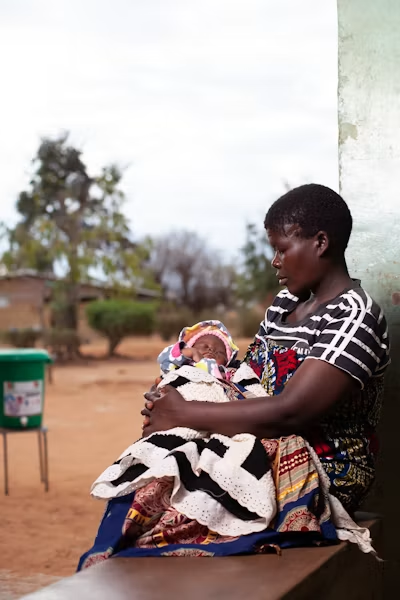
Questions About Your Test Results
You have the right to understand your own test results. Ask your health provider: What were the results of my blood and urine tests? Is my haemoglobin level normal, and do I need to change my iron dose? What do my blood pressure readings mean? Have my HIV and syphilis tests been done, and what were the results?
Understanding your results helps you take ownership of your health and follow your care plan correctly. If you do not understand an explanation, ask your provider to explain again in simpler terms. Your CHW (Umujyanama w'ubuzima) can also help you understand results after your appointment.
Questions About Your Baby's Development
Ask: How is my baby growing — is the fundal height measurement normal for my stage of pregnancy? Is my baby in the right position (from week 28 onward)? When should I start feeling my baby move, and what counts as normal movement? Do I need an ultrasound, and what will it check for?
Your baby's growth is monitored through fundal height measurements at each visit and through ultrasound when available. Understanding what these measurements mean helps you monitor your own pregnancy with confidence between visits.
Questions About Supplements and Medications
Ask: Am I taking my iron and folic acid correctly? Are there any foods or drinks I should avoid while taking these? Are there any other supplements or medications I need? Is it safe to continue any medications I was taking before pregnancy?
Many women stop taking their supplements because of side effects such as constipation from iron or nausea. Tell your provider if you are having side effects — there are practical solutions. Stopping supplements without advice can harm your baby.
Questions About Nutrition and Lifestyle
Ask: Is my weight gain on track for this stage of pregnancy? Are there specific foods I should eat more of or avoid? How much clean water should I be drinking each day? Is it safe to continue my current work or household tasks at this stage?
Nutrition counselling at every ANC visit is part of Rwanda's national ANC package. Your provider can give you specific guidance based on your current weight, haemoglobin level, and stage of pregnancy.
Questions About Birth and Emergencies
Ask: What are the signs of labour I should watch for? When exactly should I go to the health facility? What symptoms mean I should go to hospital immediately without waiting? Where is the nearest hospital with a maternity ward open 24 hours? What should I do if I cannot reach the facility on my own?
Knowing the answers to these questions before labour begins can save your life. Make sure you, your partner, and the person who will support you at delivery all know the answers and have a transport plan agreed in advance.
Related Articles
You're Pregnant: What Should You Do First?
The first actions you take after confirming a pregnancy set the foundation for your entire care journey. Here is what Rwanda Ministry of Health recommends you do immediately.
Read articles
Your Pregnancy Journey: Week by Week
A complete guide to what happens in your body and your baby's development across all 40 weeks of pregnancy — trimester by trimester.
Read articles
What Is Happening to Your Baby This Week?
A stage-by-stage guide to your baby's development — from the first cell divisions of conception through to a full-term, birth-ready baby.
Read articles