Your Pregnancy Journey: Week by Week
How does your pregnancy progress across all three trimesters?
18/08/2026

How Pregnancy Is Measured
Pregnancy is measured in weeks from the first day of your last menstrual period (LMP), even though conception typically occurs about two weeks after that date. This means pregnancy is counted as 40 weeks (280 days) in total from your LMP, divided into three trimesters. Your health provider will use your LMP date — or an early ultrasound — to calculate your estimated due date (EDD).
The Ndarinzwe app calculates your current week automatically from the due date or LMP date you entered at registration, and updates your dashboard each week.
First Trimester — Weeks 1 to 13
The first trimester is a time of rapid and critical development for your baby. By 8 weeks, all major organ systems — heart, brain, lungs, kidneys, limbs — have begun forming. By the end of the first trimester, your baby (now called a fetus) is fully formed and approximately 7–8 cm long.
For many women, the first trimester brings significant symptoms: nausea and vomiting, fatigue, breast tenderness, and frequent urination. These are caused by the hormonal changes of early pregnancy and typically ease after week 12–14. If vomiting is so severe you cannot keep fluids down for more than 24 hours, seek medical help immediately.
The most important action in the first trimester is starting ANC as early as possible. Rwanda MoH recommends your first ANC contact before 12 weeks. This is when baseline tests (HIV, blood type, haemoglobin, syphilis) are done, iron and folic acid are prescribed, and your pregnancy risk level is assessed.
Second Trimester — Weeks 14 to 26
The second trimester is often experienced as the most comfortable phase of pregnancy. Nausea typically improves, energy levels return, and your baby begins to move — usually felt between 18 and 22 weeks. This movement, known as "quickening," is a reassuring sign of your baby's wellbeing.
During this trimester, your baby grows from about 9 cm to over 35 cm and begins developing the ability to hear, respond to light, and practise breathing movements. A detailed anatomy ultrasound is typically offered around weeks 18–22 to check your baby's development and screen for structural abnormalities.
You should have at least one ANC contact in the second trimester — around week 20 — to monitor your blood pressure, check urine, review test results, and give another dose of IPTp-SP (malaria prevention).
Third Trimester — Weeks 27 to 40
The third trimester is marked by rapid weight gain in your baby, who grows from about 35 cm to approximately 50 cm. Your baby is developing fat stores, practising breathing and swallowing, and preparing all systems for life outside the womb. By week 36, your baby should ideally be in a head-down position, ready for birth.
As your uterus grows, you may experience increasing backache, shortness of breath, swollen feet and ankles, and difficulty sleeping. Monitor your baby's movements daily — you should feel regular movements every day from around 28 weeks. Any significant reduction in movement should prompt immediate attendance at a hospital or health facility.
You should have two or more ANC contacts in the third trimester — at weeks 28–32 and again at 36–40 — to monitor your baby's position, review your blood pressure, and finalise your birth plan.
Planning for Birth
From around week 28, begin planning for birth. Discuss with your health provider where you will give birth — Rwanda MoH recommends all births take place in a health facility with a skilled attendant — how you will get there, who will accompany you, and what to bring. Prepare a delivery bag at least 4 weeks before your due date, including your ANC card, Mutuelle de Santé card, clean clothing for you and your baby, and any prescribed medications.
Knowing the warning signs of labour and when to go to hospital is as important as the delivery bag. Discuss this clearly with your provider at your third-trimester ANC visits.
Related Articles
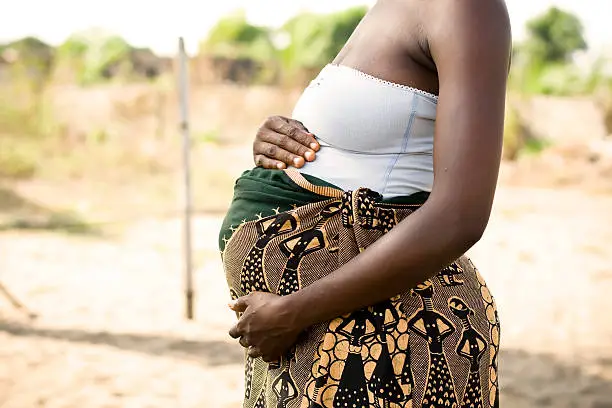
You're Pregnant: What Should You Do First?
The first actions you take after confirming a pregnancy set the foundation for your entire care journey. Here is what Rwanda Ministry of Health recommends you do immediately.
Read articles
What Is Happening to Your Baby This Week?
A stage-by-stage guide to your baby's development — from the first cell divisions of conception through to a full-term, birth-ready baby.
Read articles
What Changes Should You Expect in Your Body This Week?
A trimester-by-trimester guide to normal body changes during pregnancy — and clear warning signs that require immediate hospital attendance.
Read articles